
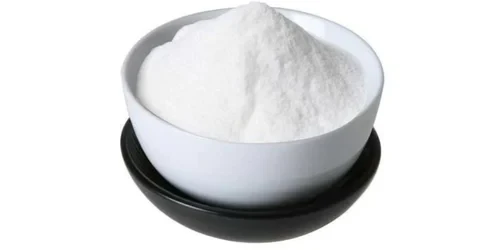
Maltodextrin BP
Maltodextrin BP is a white or nearly white, free-flowing, hygroscopic powder
obtained by the partial hydrolysis of starch, typically from corn, wheat, or
rice. It consists of glucose polymers of varying chain lengths and is
classified based on its dextrose equivalent (DE), generally below 20. In
pharmaceutical applications, Maltodextrin is widely used as a filler, binder,
stabilizer, and carrier in tablets, capsules, and powders for reconstitution.
It is also used in oral nutritional supplements and controlled-release
formulations due to its excellent solubility, bland taste, and compatibility
with active pharmaceutical ingredients. The British Pharmacopoeia (BP) sets
quality standards to ensure its safety and performance in medicinal use.
British Pharmacopoeia (BP) Specification for Maltodextrin
- Description:
White or almost white, free-flowing powder; odorless or almost odorless;
slightly sweet or practically tasteless.
- Solubility:
Freely soluble in water; practically insoluble in ethanol (96%).
- Identification:
- Chemical
Tests: Confirms presence of glucose polymers.
- Infrared
Spectroscopy: Matches standard spectrum.
- Appearance
of Solution: Clear and not more intensely colored than reference
solution Y6 (typically 10% w/v solution).
- pH
(10% solution): Typically between 4.5 and 7.0.
- Loss
on Drying: Not more than 6.0%.
- Sulphated
Ash: Not more than 0.6%.
- Dextrose
Equivalent (DE): Typically <20, as specified by manufacturer or
usage.
- Heavy
Metals: Not more than 5 ppm.
- Microbial
Contamination:
- Total
aerobic microbial count: ≤1000 CFU/g
- Total
combined yeasts/moulds count: ≤100 CFU/g
- Escherichia
coli and Salmonella: Absent in specified amount.