
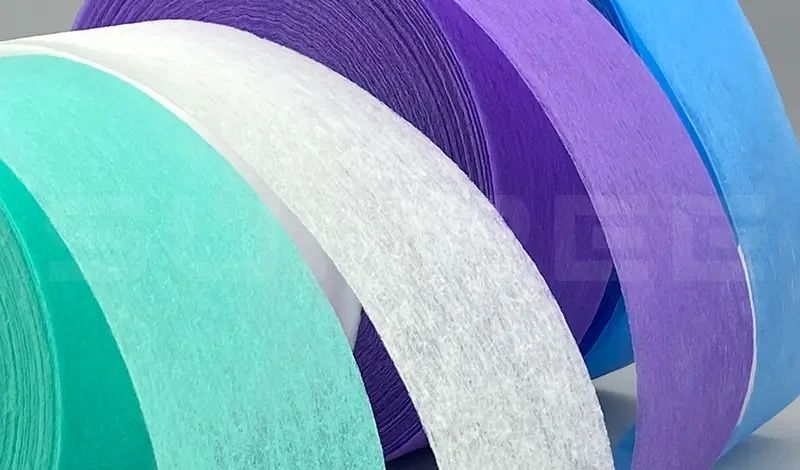
ADL (Acquisition and Distribution Layer)
ADL, or Acquisition and Distribution Layer, is a nonwoven fabric primarily used
in the absorbent core of sanitary napkins, baby diapers, adult incontinence
products, and other hygiene items. It serves as an intermediate layer placed
between the top sheet (which contacts the skin) and the absorbent core (usually
made of fluff pulp and superabsorbent polymer). The primary function of ADL is
to quickly acquire and evenly distribute bodily fluids throughout the absorbent
core, preventing leakage and improving comfort and dryness. ADL enhances the
performance of hygiene products by improving rewet performance, reducing
leakage, and speeding up fluid penetration.
Specification of ADL (Acquisition and Distribution Layer)
- Material:
Thermobonded or chemically bonded nonwoven (commonly made from polyester,
polypropylene, or bicomponent fibers)
- Basis
Weight: Typically 20 – 40 gsm (grams per square meter)
- Color:
White, blue, green (blue is commonly used for identification in hygiene
products)
- Thickness:
0.3 – 1.0 mm (depending on structure and bonding)
- Absorption
Speed (Acquisition Time): ≤ 3 seconds (depending on test method and
product design)
- Rewet
Value: ≤ 0.2 g (indicates how much moisture is released back to the
top sheet)
- Tensile
Strength:
- Machine
Direction (MD): ≥ 5 N/25 mm
- Cross
Direction (CD): ≥ 3 N/25 mm
- Permeability:
High liquid permeability required to allow rapid fluid transfer
- Air
Permeability: ≥ 150 L/m²·s (at 100 Pa)
- Elongation:
Typically 20% – 80% depending on fiber type and bonding
- Chemical
Additives: Should be skin-safe; typically surfactants are added to
enhance hydrophilicity
- Biocompatibility:
Non-toxic, dermatologically safe, and hypoallergenic
- Odor:
Odorless